What Expanded Learning Makes Possible
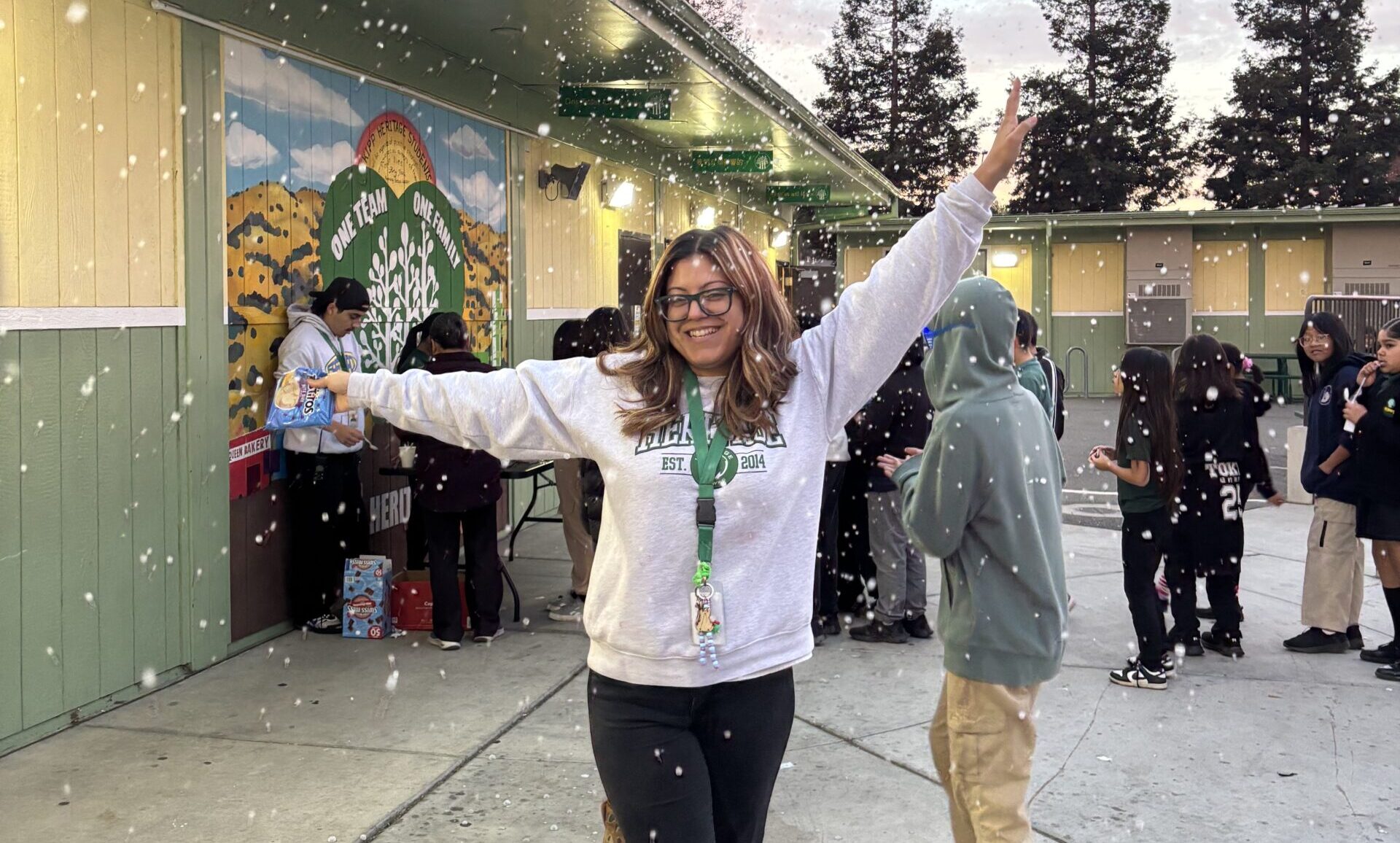
Mayra Anaya, KIPP Heritage Expanded Learning Site Director
If you read my birth certificate, it says I was born in Los Angeles, but the full story is richer and more complex. My family returned to Mexico soon after I was born, and I did all of my elementary schooling in a very small town called Sayula in Jalisco. It was the kind of place where everyone knew everyone. School felt like an extension of my family because classmates lived around the corner, and my parents and teachers would always check in. When I look back at my elementary education, what stands out is how hands-on and community-centered the experience was. I remember making piñatas at school and how we would close off the street near campus for big celebrations.
Everything changed when we moved back to the Bay Area and settled in Richmond. Suddenly, I was the new kid who was also navigating learning English. Richmond was rough. Back then it was labeled one of the most dangerous cities in the country, and my parents were protective. School days were full of distractions: fights, instability, and the weight of trying to catch up in English while also keeping up academically. There were moments where I wondered if I would make it out.
What kept me moving forward were a few key adults and the programs they connected me to. At Richmond High, I joined the Law Academy and a teacher named Mr. Mooney recommended me for internships with the Center for Youth Development through Law at UC Berkeley. I interned with the Oakland Police Department, led youth programs, and took legal classes and career development workshops. Those experiences opened my world as they showed me that there were paths beyond my neighborhood and that I could choose a different future. Of the twenty kids I started high school with in my friend group, only a couple of us graduated, and I was the only one who went to college. That reality drove home for me how fragile opportunity can be and how critical it is for adults to step in and create bridges.
I went on to UC San Diego to study sociology with a focus on law and society. College was hard at first. I struggled academically and quickly realized how underprepared I was for university-level academics compared to my peers. But through tutoring and other extracurricular programs, I persisted. Working with those programs as a student counselor changed everything for me. I began helping high schoolers with applications, internships, and the practical parts of getting to and through college. I realized that my calling wasn’t law; it was education.
After earning my master’s in counseling from San Diego State and working as sixth grade teacher and then dean, I found a role that allowed me to bring together everything I cared about—college readiness, enrichment, culture, and strong teaching practices. I’m now the Expanded Learning Director at KIPP Heritage in East San José. The alignment between my passions and my career feels like coming home.


Ms. Anaya decorating pumpkins with students in Expanded Learning and with some Expanded Learning Staff at KIPP Heritage
At the heart of our Expanded Learning program is choice and connection. We run clubs that mirror the kids’ interests, and we offer hands-on project-based learning that helps students discover what they love. KIPP offers Expanded Learning through our daily after-school program, as well as weeklong intersessions during school breaks like summer and winter vacation.
We have Lego robotics, printing courses, coding, cooking classes, piano lessons, photography with a yearbook club, sports, field trips (like going to Monterey Bay Aquarium recently), gardening club, college and career readiness workshops and fairs, STEM and project-based learning activities, sports, a knitting and jewelry making club, and so much more. Knowing how much my own early hands-on education shaped me, I want my students to get to experience something similar through Expanded Learning.
We try to design the program so it feels like a natural extension of the school day. Consistency matters: same expectations, same routines, same values. We serve as the bridge between daytime instruction and after-school, and I make sure our staff are getting the coaching and clarity they need to run high-quality lessons.

Ms. Anaya awarding Specialized Teaching Program KIPPster with “most involved in sports”
Family partnership is essential. I send weekly messages and a monthly newsletter, host showcases, and invite families to participate in events so they can share their traditions. I call parents when students get hurt, I sit in conferences, conduct restorative practices and I encourage my team to make five positive calls to families every day. For working parents, after-school programs aren’t just enrichment; they’re a lifeline. When families know their child has a safe, engaging place after school, they’re more likely to stay connected to the school community.
I feel lucky to have seen the evolution of our school’s amazing Expanded Learning program. I remember coming in for the first time years ago before our program moved in-house and observing most of the kids on their phones. It felt more like a daycare than a launchpad for student curiosity, connection, and learning. I talked to parents, teachers, and community members on what they would like to see from the Expanded Learning program, and what I heard was the need to enrich our KIPPsters’ life experience while providing academic support. That community input is the foundation from which our current program grew.
Expanded Learning matters because it gives our students the time, support, and chances they may not consistently get during the regular school day. From lived experience, I know this program offers a safe place to be after school. For many of our students, Expanded Learning means being inside a warm, supervised environment instead of being out on the streets or home alone while caregivers are working. It’s a space where students are fed, cared for, and protected—a place where adults know their names, check in on their well-being, and intervene early when something doesn’t feel right. Alongside safety, students gain mentors who look like them, internships and field trips that open doors, and consistent routines that mirror the school day so learning continues seamlessly
What I hope every student and team member takes away from our program is this: you belong here, you are capable, and there’s more for you in life than what your immediate surroundings might suggest. I want staff to share ownership of the vision so they can carry it forward, and I want families to feel welcomed, involved, and supported.


