
Surfacing Student Thinking: What KIPP’s Learning from AI in Middle School Classes
When a new tool enters a classroom, someone has to be willing to ask the hard questions: Does this actually work? For which students? Under what conditions? At KIPP Northern California, we’ve built our AI implementation around this inquisitive discipline. Rather than rolling out promising technology and hoping for the best, our model treats our schools as a rigorous learning environment. Teachers, coaches, and researchers work together to surface what’s really happening for students and use those findings to make smarter decisions about when and how to scale.
This year, we piloted Course Mojo, an AI-native software that pushes students to move beyond surface-level reading and build the habits of inference and evidence-based reasoning that anchor strong academic writing. We’ve rolled out the program in our 11 middle school English Language Arts classrooms over the past year.
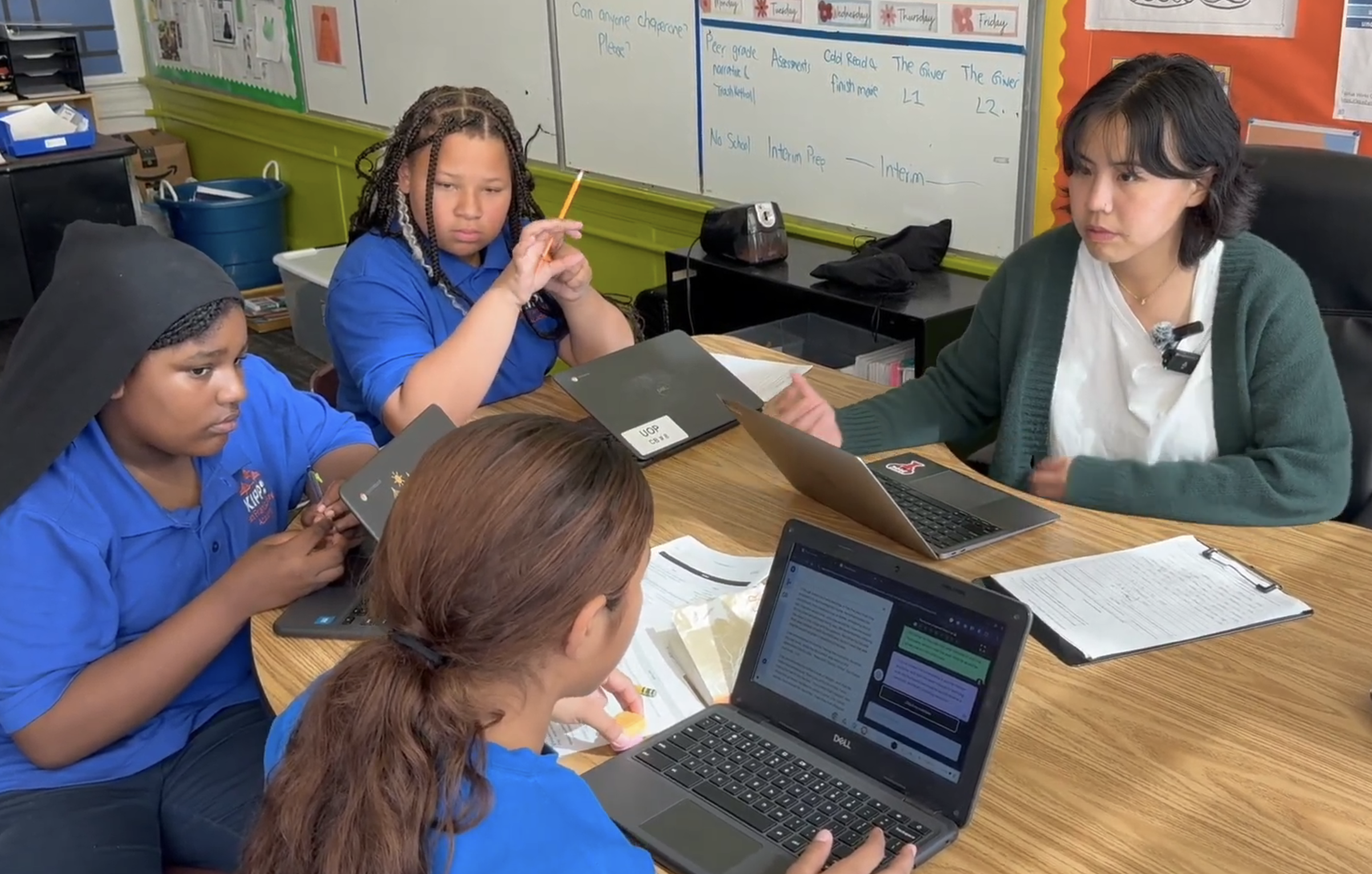
Annie Chen teaches a small group in her 6th Grade ELA class with the support of Course Mojo
For Annie Chen, a sixth grade English teacher at KIPP SF Bay Academy, AI-supported instruction has been less about automation and more about engagement. In her class, Annie works with many multilingual students and students with Individualized Education Program plans. This means a lot of her time prior to using CouseMojo was figuring out different systems to support and meet the needs of as many students as possible. But with limited time, there were ”some points where I was not supporting the needs of all of our students,” she shared. “Course Mojo helps give me time to do so”.
“I can quickly see where students are stuck,” she explained. “Sometimes they can tell me what happened in a story, but not how or why. Course Mojo surfaces those misconceptions quickly.”
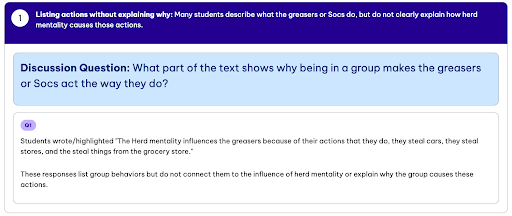
Example of Course Mojo showing corrections to a student from a previous prompt
Those insights help her make real-time instructional decisions. Annie is able to intentionally pull small groups of students with the help of the program. She can focus on students who need support unpacking their thinking rather than just correcting answers: “I can look at the data and see how well students are understanding the standards”.
From there, Annie is able to know when to focus on the small group, and when she needs to pivot and re-teach a lesson to the whole class.
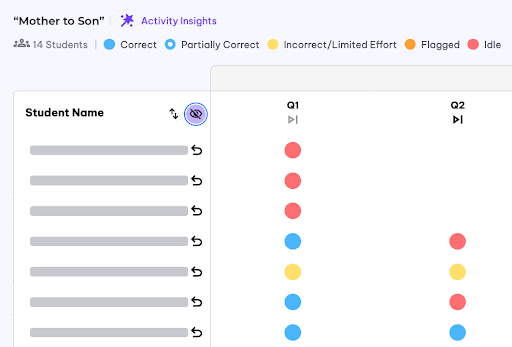
Example of what teachers see on their Course Mojo dashboard
She’s also clear that no tool can replace a teacher’s presence. Course Mojo requires thoughtful setup, and students still need active monitoring and coaching. This is especially true when the system looks for specific language that students might conceptually understand but not yet be able to articulate.
“You have to see AI tools as a different way of teaching, not less teaching. It frees up thinking time and allows me to focus on more targeted supports,” Annie shared.
She also credits a lot of the success of implementing Course Mojo to strong routines and classroom systems. She’s found that students are highly engaged when there are expectations and classroom norms set in place: “When I tell them we’re using Course Mojo that day, many of them cheer.”
For Annie, the value of AI in the classroom lies in more face time with students, quicker and sometimes clearer insight into their thinking, and new entry points for instruction that would be hard to sustain at scale without support.
Don Pham teaches 8th grade English at KIPP Prize in East San José. For him, the shift to AI-supported instruction has been a process of trial, feedback, and refinement.
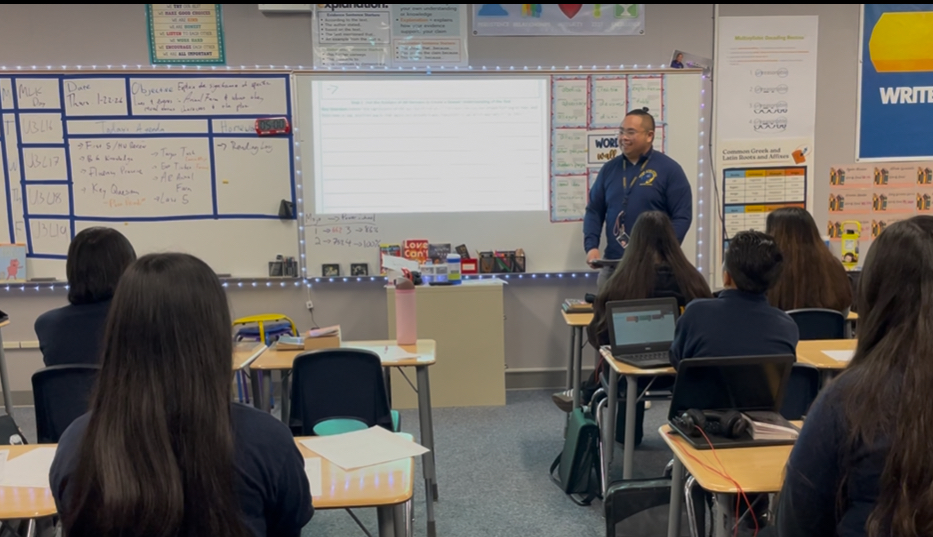
Don Pham teaches his 8th Grade ELA class
“As an organization, this being our first year launching Course Mojo and AI feedback, it’s off to a good start,” he shared. What’s mattered most to him is that the work feels iterative rather than fixed.
“The Course Mojo developers are actually taking our feedback. Everything we’ve sent them, they’ve fixed in an appropriate amount of time.”
That responsiveness has shaped how he uses the tool in practice. Early on, he noticed that Course Mojo’s writing feedback sometimes pushed students toward a more casual tone in writing assignments, even when that didn’t match his exemplar. For Don, this ability to course -correct matters, and it was essential that teachers are still the ones to set expectations, not AI.
“As a teacher, I want high-level academic language,” he explained. “Now I can tell Course Mojo what a 4 out of 4 looks like, and it adjusts.”

An animation showing how a teacher can override automatic scoring in Course Mojo
One of the wins of the pilot has been in capturing and celebrating individual student growth in new ways.
“Before Course Mojo, you’d get the final result and miss all the small victories along the way,” he reflected. Now, Don’s seeing students who are not yet at grade level still experience incremental wins.
“I see students who struggle in class celebrating those small moments of getting the process right. That didn’t always happen before.”
Still, the program isn’t a magic wand. For students already at or above benchmark, the feedback can feel limiting.
“Sometimes the tool doesn’t support everyone’s rate of growth, And sometimes the feedback can feel generic or cheesy,” Don shared. “Ultimately, no AI tool can replace knowing your students as humans.”
That is the core principle that underpins our approach to AI—it may support human thinking, but must not replace human judgement and human connection, especially in classrooms where our students are actively learning who they are and who they want to be. We want every graduate to know their own voice and trust it, to have the skills to partner with AI without being overshadowed by it, and to be fully equipped for college and the future while remaining rooted in themselves and their brilliance.
To do this, we are listening closely to teachers like Annie and Don. We know from experience that educator-led innovation leads to the strongest results for students, and it’s key for us to approach AI the way we approach everything: with curiosity, rigor, and a commitment to continuous learning and improvement.